Bummer

Well I realize it has been ages since I have uploaded any new posts. But I have such good excuses!!! It is indicative of being busy with work and also a cause of the recent lapse in computer availability. Part of the glamour of living au village in Africa is the death of many electronics and alas my computer’s battery and cord have refused to go on roughing it. Good news though, a friend is bringing me back a shiny new netbook from the States in July which will not only work but should sustain hours upon hours of compt. life without a constant life line…so get ready for an overload of posting here in the following months.

Other than that things are wonderful and eyeopening as always. Everyday I learn so much more about myself and those I share this planet with. I couldn’t be happier and can’t wait to share my stories with you all.

Currently I am busy busy in the garden and helping get the fields ready and planed for this season… I have been doing some work with Administration and attended a sector wide conference on behavior change recently and can’t wait to spend some more quality time back home in Ataloté!

20/20 You disappoint me

I wanted to post my commentary on the recent media about the Peace Corps in regards to the unfortunate events that came to pass in Peace Corps Benin. This goes without saying that what happened there is very sad and we as volunteers all grieve for these types of situations that (on average) rarely occur. I am ashamed about how the Peace Corps was portrayed by the American media, but that is really no surprise.

I agree that many elements of that case could have been handled with much more tact and thought towards the family of the volunteer. However, as volunteers were are acutely aware of the risks we are getting ourselves into. It is a different world over here; different customs, attitudes, safety concerns and we are VERY well aware of all of these elements. We are here of our own accord. We can leave at any time if we feel our safety or comfort is being jeapordized. In life there are always safety concerns, especially as a young woman, or any woman. This is our reality, and yes, when we become victims we NEVER deserve what happens, but there is much we can do to avoid getting in these types of situations. Constant vigilence and awareness of one’s surroundings is necessary- no matter where you are in the world, danger follows you like a shadow.

I am very sorry that the women in the 20/20 special felt the way they did about the Peace Corps and their respective services, and felt the need to create such public fervor. This year marks the 50th anniversary of Peace Corps. It is one of the best American institutions to date and we ought to be globally celebrating…as most of us are.

We as volunteers are the number one person responsible for our safety. The Peace Corps is a complicated and vast bureaucracy. Much of the in-country staff are host country nationals; at least here in West Africa private and public lives are not necessarily seperate. I realize it sounds highly irresponsible that information might have been leaked and confidentiality breached, however this could be easy to understand when you understand that first and foremost people here take care of one another before taking into account the lives/well being of foreigners. I believe the situation got out of control fast and no one could have forseen the danger that the PCV ended up in.

I myself feel 100% safe here, at least as safe, if not more, than I feel back home. I LOVE being a volunteer and I know my community genuinely cares about me and would do anything to protect my safety and well being. I also feel the utmost support from the agency.

I extend my most sincere condolences to the bereved of Kate Puzey and any PCV that has become a victim as a result of serving overseas with the Peace Corps.

I know for a fact (as a result of my training, which we were informed is new and much more extensive…if not overkill and creating an atmosphere of unecessary fear for trainees) that the Peace Corps is re-vamping their security training and attention to such problems as a direct result of this tragedy and media coverage.

I can only say that I feel it was unfairly portrayed and I am sorry that this is how media coverage works in our country.

Reflections

Things I am completely accustomed to doing and seeing on an everyday basis:

-facial and body scarification (this is to identify natal villages, others are ritualistic and for protection).

-babies and small children on motorcycles, in between the driver and the handlebars.

-trash heaped EVERYWHERE; on the side of the road, outside houses, all over the market…

-drinking out of a plastic bag, eating with my hands.

– women peeing standing up with no attempt to conceal it or let it interrupt the journey to their destination (and surprisingly revealing nothing inappropriate…they are my heroes).

-Babies with tar or clay covering their cranial soft spots (to keep spirits out).

– Taxis filled with twice the normal number of occupants and piled twice its height with cargo.

-Giving babies and small children alcohol; tchouck, beer, hard alcohol (?! albeit small amounts, but some more than others if they hang around the tchouck stands long enough).

– Ritual/purposeful animal slaughter.

-Chickens died pink to identify them (first time I saw this was in Kara, the chickens were eating from some seriously toxic looking sludge and for a minute I questioned the cause of the color…).

-Kids, from three and up, with babies half their size wrapped onto their backs.

-Day to day health and safety precautions…everything can become a habit surprisingly easy with time.

-Burning my trash, it sounds counter-intuitive to my work here but there is really no other option.

-Realizing that African people are the experts at recycling and ‘green living’ because there is no other way.

-Community living. It is beautiful.

Things I have yet to normalize:

-The immense patience and nerves of steel it takes to travel through country here, but I am getting much better.

-The chaos of open-air bazaar style markets- also getting quickly adjusted to this.

-Kids doing manual labor in lieu of class (Travailler manuel- Manual labor days, twice a month for the teachers and school grounds. Kids are also go-to’s for all errands and any work an adult can convince them to do. They are tireless.).

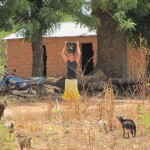
-The immense about of labor women and girls do each day, and how physically strong they are!

-Untreated, serious maladies both physical and chronic.

-The attitudes of Togolese men.

-Dogs, and various other animals, constantly being hit, or nearly hit and injured by motos and vehicles.

-Flies, everywhere, all the time. On my legs, on my face, on my food, on my dinnerware, trying to fly up my nose…everywhere.

-People staring at my hair and asking me where I got it and to give it to them after I cut it off.

-Bleaching cream, if I know how to make it and people asking me about the machine that can make their skin like mine. “You know, like the one that Michael Jackson used.”

Food:

Togolese staples include (in order of preference):

Watche- rice and beans

Soja- fried tofu with piment (crushed red pepper and oil)

Wagash- fried cheese, (think rubbery mozzarella), often coupled in tomato sauce hard to find all the time because it is made/sold by the Fulani people who are nomadic cattle herders from the North African countries. You can also buy it fresh, take it home, boil it and crumble on to salads like feta.

Fufu- pounded yam/igname (starchy oblong, up to two feet!, potato, not sweet and very dry) mixed with water, think very thick mashed potato eaten with variety of sauces.

Koliko- fried yam…Togolese French fries, also served with piment.

Maca(short for macaroni)- this includes all variety of pasta but generally implies spaghetti noodles normally served with some other starch at the same time, rice, koliko etc. Not always with any type of sauce and often cold.

Pâte- least favorite, essentially any type of flour mixed with boiling water and then formed into starchy- mush-mold, served with sauce and always burns my fingers! This is what I make to feed to my pets.

Sauces are:

Tomato sauce- made with tomato paste and a lot of piment- super hot peppers!!! (my favorite, I literally can’t get enough of it).

Sauce gluant- a couple of different varieties some with okra, others with various native plant leaves…all create a green sauce resembling the consistency of snot, and lacking much taste but probably the most nutritious.

Meats: (I don’t eat any but for common knowledge/interest…)

Crushed and dried fish, put in many sauces and only noticeable by aroma and shiny scales here and there.

Pintad- guinea fowl, supposedly delicious and preferred over chicken.

Chicken, Pork, Beef (Latter two are generally hard for villagers to buy unless it is for a fête, or any meat for that matter).

**most meats are in small quantities and mixed in with the sauces…unless you are at a restaurant in the city or around city living Togolese, which is a whole other world.

Things I cook when I have the energy:

Soup- French onion, cream of onion, potato, carrot, cream of tomato… I like soup.

Breakfasts: Home fries, veggie scrambles, rice pudding from leftover dinner rice, oatmeal, egg sammys with Togolese buns*. If I have guests I might make peanut butter pancakes, crêpes, or French toast.

Lunches: Salads!- when veggies are available, salsa, refried beans, queso dip, guacamole (avocados in the South are a dollar right now!) all with homemade tortillas, peanut butter and jelly sandwiches.
Dinners: rice, beans, cream of mushroom pasta, pad-Thai (or something like it), stir fry, salad, soup, lemon cream pasta (divine), macaroni and cheese.

Desserts: chocolate cake, peanut butter oatmeal no-bake cookies, lemon cake, zucchini bread, banana fritters, banana bread.

Beverages: delicious locally grown coffee, solar tea, sangria.

Things I would like to make but haven’t tried out yet:

pizza, jams and marmalades (coming soon with all the mangos that are about to be ripe in my compound), squash gnocchi (also hopefully soon with squash soon to be ready in my garden), bagels, polenta (should be super easy because I go to mill to grind my own corn flour so I can grind it less to make cornmeal), soja tacos- implies corn tortillas, see previous comment.

*They make good bread here, it is all white bread but at least we have bread, many P.C. countries do not and it is one thing you can eat when you don’t feel like cooking and heating up the house. Most villages do not have bread to buy and you have to buy it at the weekly markets. I am lucky though Sun. and Mon. there is a woman who makes bread in Ataloté and it is by far the best and freshest I have found.

**I usually only have time and supplies to make one to two of these types of meals. i.e. I will make a big breakfast and finish it for lunch or make a big lunch to finish for dinner. I can get a lot of ‘Western’ type food and supplies in the bigger cities but it gets pricey and perishables go bad fast. It is amazing though what you can get away with not refrigerating that we refrigerate in the States (i.e. eggs, ketchup, jam, veggies, mayo/all condiments). Cooking is a hobby that many volunteers relish and indulge…seeing as sometimes it is a good way to pass the time, not to mention delicious.
Logistics

I realize that many of you who might be reading this may need a bit of a re-cap, a summary, a synopsis of my day to day life here (and maybe I need one too). So here goes:

Typical (Non-work) day:

I wake up around 6-6:30 to the comforting white noise of my host mom and/or sister sweeping the compound of debris: leaves, random trash, chicken feathers and so on. I roll out of bed from underneath my mosquito net, something I have now gotten used to and find it reassuring, if a bit stifling. My bed is essentially a woven cot, many volunteers spring for a ‘real bed’ but I have found the lit picot, (literally woven bed), far cooler. I generally dress and head to the garden in my daily race to beat the heat and the mounting sun, by 8 it is too late.

I water the garden and greet my fellow gardeners in the gardening group that cultivates around the small scale dam in my village. If my plot requires any manual labor for the day I try to get that done in the morning, such as aeration or weeding, as opposed to the evening when it never really cools back down until night and the mosquitoes, chiggers etc. are en mass!

If I am feeling social and don’t have too much to do at the house I will make a round to ‘downtown’ Ataloté to grab something to eat and greet the people hanging around drinking/selling Tchouk and eating bouille (porridge). This is generally if I have had a bit of work at the garden and it is farther on in the morning.
Otherwise I return home, sweep the porch/house, make my pets food, make breakfast and enjoy it on my nice lounging chairs and watch the compound activities or do a bit of leisure/work reading.

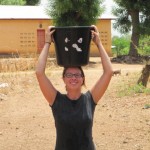
Generally, around 11 o’clock I will go to the pump and get my water. I am highly lucky; my village has solar powered water pumps with faucets…this is very rare, normally there are wells or hand pumps in village. However, there are times when the pumps do not have enough solar energy to pull the water up. I have found closer to noon to be the best time, also it serves as a social opportunity because normally all the kids on lunch break from school are there as well as my women neighbors. Not to mention the water splashing from the bucket onto my head and body after a few trips serves as a much needed refreshment, and lets me evade a mid-day shower to cool down. I have estimated that, on average, I use less than five gallons of water a day, that includes drinking water and showers (not including garden but that is not drinkable water)…how many houses in the States use that much just to flush the toilet? And I am far from suffering.
After that I think about lunch, I either decide to make it or head down to the village to see what I can find. From noon-2:30P.M. is considered ‘repose’ time and most people nap under trees in the shade and doing much of anything is unthinkable, it is too hot and the sun is at its height.

My garden is fairly large for one person, twenty-one beds and counting, and so requires loads of work. Because of the heat and dry climate it needs watering twice a day- in the morning to prevent the plants from wilting, burning, drying up and in the evening for optimal growth. It is too hot to water/work until around 4 in the afternoon, this is also the time when I transplant seedlings and apply natural pesticides if necessary.

I generally stay at the garden until dusk, and often go have a calabash with Victor afterwards if we have time and try to make it home before dark. Then I shower, make dinner if I have the energy and read/organize/plan work etc. by the light of my kerosene lamp and/or candles until about 9-10 o’clock or so and then snooze off. I used to be asleep by 8:30! but as I become more accustomed to my routine and environment here I have found 9-10 hours of sleep is too much and struggle to find time to get everything done for planning work projects.

All of this is keeping in mind that I rarely have days like this…
Often times, more often than not, something- an opportunity to bike out to an outlying village, greet an ill friend, will crop up. Patience and flexibility, the eternal Peace Corps mantra. Other days I have work meetings: Thursday mornings from 9-12 I have my woman’s liquid soap groupement meeting, Sunday and Wednesday evenings I have club meetings with the local middle school students. Tuesday is market day and I am generally there all afternoon if I can stand it, being the biggest social event all week. Friday is the market day in Kanté and I come in every/every other week to get veggies etc. and my mail. Saturday mornings I have local language tutoring. Sunday I do my laundry and clean my house. As I get busier with work, my schedule is continually evolving. It took me until now to get this routine down and is key to keeping my sanity, but flexibility is essential to community development.

This may seem like a light schedule to Americans who are so used to jam-packed days…but believe me it is exhausting, and I am as busy as could be.

Togolese life:
I live in a three room row house, (which is HUGE for one person), in a compound, (like almost all Togolese), which is a group of buildings, sometimes interconnected sometimes not, facing in to a common courtyard area.

I do not have the luxury of electricity or running water (believe it or not many volunteers here do have one or some combination of these); I get my water from a pump and store it in big plastic trash cans.

I use a simple latrine.

To shower I fill a bucket with water and pour it by the cup full over my head and body.

To do dishes or laundry I fill basins with water and air dry everything…which is super fast here because of the arid heat up North. Down South is different and nothing ever seems to dry because of the humidity.

To cook I have a tank filled with butane natural gas and a two burner camp stove that I light with matches, (most Togolese in village use two rocks and branches, or a simple charcoal stove and a palm fan).

The Harsh Reality

I had a fantastic time in the grand city of Kara for my twenty fifth birthday. It was very chill and much enjoyed. At that point I had spent nearly a month without leaving Ataloté and needed a break from all that integration work. I love it but it can be exhausting. I brought an interminable amount of stuff back with me and must have looked a sight with a wicker basket and a watering can tied to the back of my huge backpack! The ride back to town took a bit longer than normal because there was a turned over lorry blocking the road. At this point I hold my breath every time we mount the hill pass that leads into Kanté because nearly every time there are horrendous wrecks like this, it is just a matter of if it is blocking the way or not. In many cases you just see mounds of goods on the side of the road with a group of expectant looking people. Then you know that the truck had plummeted off the edge and these people had trekked down to salvage what they could from the wreckage while waiting for another lorry to load it on to and continue the cycle and goods transportation in this region of the World. This time wasn’t as bad, the truck, severely overloaded and nearly twice the height of a semi-load in the States, had simply tried to get by another truck and the drop off of the pavement to the “shoulder” had caused it to tip over and the road was blocked because there was a tow truck with a crane to cinch it back upright (!! first time I have ever seen this!! and is most likely because of the proximity to Kara where the president is based and there is a lot of government funding… hence the nice/developed-ish nature of the city) Anyways, I had to switch taxis cause the other one didn’t want to wait and heading back to Kara and wait for a while on the side of the road. Classic of Peace Corps Togo I ran into a couple of volunteer friends from up North I wouldn’t have otherwise seen for who knows how long and so it was fairly painless.

All the good feelings of the birthday trip evaporated immediately as soon as my moto driver picked me up. As we were heading out of Kanté and towards village he let me know that Victor’s wife Madeline was at the hospital with their four month old baby Adelph. He was very ill and he had taken them there earlier that day. As I entered the graveled pathway up to the pediatric compound of the hospital I could see Madeline’s face and my stomach dropped. Adelph was writhing in her arms and crying in a high pitched, pained manner. There were four or so other mothers with sick children sitting around. Waiting; waiting for the illness to pass or for it to ravage and take their babies away. There was a television in the corner and the doctors and nurses were watching a soccer match. Madeline looked so helpless, scared. She didn’t know what to do for her baby who was clearly in pain and sweating from fever. I couldn’t find any words to say but I touched the baby and felt how warm his tiny body was. As if on cue when I came in the doctor started to shout at Madeline telling her to give more medicine to the baby. Yanga and I helped measure out the four or five products he was to take. One looked like amoxicillin, the others I have no idea other than one solution for dehydration. Then we helped her feed him some watered down pâte (millet flour with water) which most ran down his face and all over his body which necessitated a wash. Madeline held the baby on her feet on the ground and we poured cool water over him as he screamed and writhed.

I knew the real unspoken concern. Yes we were concerned about the baby’s recovery. Yes we were concerned that he might have a bad case of malaria at so young an age. But here in Togo many children die because they never make it to this stage. Parents keep their sick babies at home until the last possible moment because they cannot pay the hospitals; which will not treat the babies without payment, they will and often do turn away sick babies, children and adults that are in real danger of death because of money. I knew she wouldn’t ask and I knew that while Yanga brought me here as a concerned friend to visit the sick, he also brought me here to help our friend in the only way I could. I asked her how much all the care would cost, gave her what I had on me to cover the medicine and promised to be back the next day with the rest and to hear about the test results.

I biked in the next day, normally I wouldn’t leave village again so quickly after just arriving but these were special circumstances. I left on my bike at the worst possible hour, 11AM just when the heat of the day is starting, but the thought not only of the baby but of my best friend in village alone and helpless with the mean doctors helped me push through the heat and the sand of the 15k ride until I got to the hospital on the outskirts of Kanté. He was doing a bit better and Victor was there. I held Adelph and never thought I could be so happy to make a baby smile. V. seemed on edge, rightfully so, and the three of us followed the doctors around with the baby getting/paying for more products, waiting for the lab results. At one point one of the doctors noticed me and asked me what I needed. I told him I was here to support my friends and that we wanted to know what was wrong. He was unable to give us a definite answer. The malaria test came back negative and to be frank it seems like that is the only thing they know how to test for. Everything is the “Palu”.

We went back to sit down in the waiting area. There were some of the women from the day before and also a young girl of maybe 7 or 8, it was hard to tell because she wasn’t much more than a skeleton and didn’t say a word. The doctors were starting to get a little brash, one of them started asking me questions about life in America in relation to life here. I was a little short with him because I failed to see how this was an appropriate time, but I suppose the situation was irrelevant for him. People dying because they are poor. Then he devolved into a typical Togolese man and started asking me if I was married, I told him I was and that my ‘husband’ was in a village to the West. He didn’t believe me, told me that I should take another, himself. I walked away disgusted. Far from the first time I have gotten comments like this, but I expected a level of professionalism from the staff but it seems the more powerful the position a man here has, the more he abuses it. Victor and I took Madeline to get a quick drink of Tchouck, to give her a little rest/relief, before heading over to the marché. We walked the long walk there in silence.

My neighboring PCV was also sick and I paid her a visit. She had malaria but seemed to be doing alright if a little weak and shaken. I stopped by the hospital on my way home and gave V. the money to pay the bill. I knew this was difficult for them but necessary and was nothing to me. I never had a second thought about lending the money. Something I have been battling at post, continually turning down requests for money to help people suffering in one way or another. This was different. This is my family.

As I walked out of the compound I ran into the nurse. I seized the opportunity to corner him and questioned him about the baby. I asked him what was wrong, he shook his head slowly back and forth looking at the ground and said “C’est le Palu”. It is Malaria. I mentioned that the test had come back negative, he replied “Yes, but it is Malaria.” I rode away with a sour taste in my mouth; a residue of the medical staff who are supposed to help these people. Sometimes it seems so futile. Adelph and Madeline stayed for the entire week, the baby had lost a lot of weight and was weak from the parasite and the fever, but he survived and is recovering well. He is lucky.

Frustrations and Triumphs

I have won the battle against the cockroaches; against the spiders and the ants. I have learned to live with the choking dust and the bats and mice that keep me awake at night. Benadryl and chemical warfare are newfound friends. I have turned another year older and at least this one will be different, no way to complain of being stuck in a rut. I will spend all of my twenty fifth year here in Togo, and I am beginning to see it as a life, a home. I miss the mountains but Togo is far from bereft of beauty- the hills, the distant brush fires that light up the night sky, the extraordinary sunrises and sunsets, beer that costs a dollar and counts as two… I can get used to this.

Dog drama

I finally got myself a pooch. Something I can smother when lonely and force to love me no matter what, a friend to follow me around and talk to with an understanding that sometimes feels more authentic than all the conversations of the day. His name is Jack, like Kerouac, which apparently is no good because here you don’t give a dog a man’s name. I tell them, oh well I guess he is just bizarre comme moi… I caught him eating a guinea fowl outside the compound on the way to the garden the other morning. Very bad, dogs get eaten for less ‘grave’ behaviour here. Mia, the dog in my compound that I tried to adopt initially is the source, ‘elle vole!!’ says everyone, she steals, meaning she kills chickens and guinea fowls -people’s dinner. This is the reason why it didn’t work out between us. I wanted to save her from her fate but she wouldn’t take to me (until after I got Jack and then she became insufferably jealous and territorial) and I got tired of everyone telling me what a bad dog she was; that I needed to get a puppy, a male, because after they give pups the females are ‘dirty’ and no good. So now she is really in for it, seeing as how Jack is too small to kill a full grown fowl, she is the immediate suspect and the next day she was chained to the orange tree being prepared to be ‘taken out to a farm in the country’ which I think is a euphemism maman told me to make me feel better after I kept asking if they were going to kill and eat her. Bye bye Mia, I will miss your mischievous little mug.

Brief side note: On New Years I had a very interesting conversation with a local crippled man who came by to drink, chat, and pick up his 25f cadeau. The subject was about eating dogs, a very common practice here but apparently there are a few loose guidelines. You don’t eat your own dogs, you eat the ‘bad dogs’ like Mia that come from ‘the city’ or somewhere else. And according to this man, and confirmed by similar conversations other volunteers have had, it is unacceptable for women to eat dog, it is only for men. I attempted to probe him for an explanation but to no avail. He just said that women can eat chicken, guinea fowl, goat and sheep, and beef if afforded and available. Interesting.

So as I told everyone in village I wanted to start ramping up for ‘work’ projects, (meaning other than integration work), in January after the New Years celebrations. I had my reasons, other than that I needed more time to integrate and understand the village dynamic (and still do), everyone was preoccupied by harvest and parties. True to my word I held my first community meeting last week and tried my best to feel that it was not a complete disaster. I am tired of people asking me for money, exhausted to be exact. I felt that while they have had a volunteer here for the past two years there was much misunderstanding as to what the Peace Corps is and what my role is in the community. I wanted to clear a few things up, starting with the money, and let people know that I am here to work for them but patience and good organization is paramount to utilize our time and resources best. I spent the entire day before at the marché going around and verbally promoting the meeting for the next afternoon. I employed the town crier, Victor and I went over the outline of my agenda… nobody showed up. After about twenty minutes of V. going around and shouting at everyone around town to gather up we got about twenty or so people to congregate under the baobab and listen to what I had to say. The meeting itself went well; V. did an excellent job translating into Lamba, I cracked a few jokes, we had good response and questions asked. I should have felt better about it but couldn’t help but feel a bit slighted, considering not even one person from my compound showed (after multiple promises of attendance) and the following hour was filled by people asking me to buy them drinks and one further request for a personal loan. I have decided to resolve to cold refusal; it seems to be the only way.

One of my other January goals was to start my garden, being a natural resource management volunteer and all. The day after the meeting, V. had asked the guys from the gardening groupement to show up and help me clear my plot and dig my beds. I bought 2000f of tchouck beer and asked Madeline (V’s wife and my closest friend) to make up some lunch – both expected for working for someone here and one of my favorite perks to helping out with harvest – Togolese picnic style. While the men burned off the dead sorghum and elephant grass stocks and used pick axes to break up the impenetrable land, and while still others set up and searched for fence posts for me, I busied myself (unable to do much else and feeling like I was in the way) with starting my compost pile under a nearby tree right next to the lake, a perfect location. I was hoping for it to be intriguing or bizarre enough to the gardeners for it to function as a sort of technical demonstration, to an extent it worked out but follow up is needed.

The reason why Ataloté is able to have such impressive gardens/gardeners is because as V. puts it ‘during the time of my parents’ someone had helped create a man made lake at the base of the hill behind village where the water from rainy season has created a small lake that recedes during dry season but does not dry up. The gardeners, all farmers as well who have nothing to do during the dry season until prepping their fields just before the rains, use the land where the lake recedes to garden and the groupement, aside from organizational issues, is impressive. They definitely know how to grow but I hope to implement some easy techniques for them to spend less money and increase yield. The people here are very motivated and I think if I approach things right they will be very receptive. One example of this is when I showed V. how to double-dig his beds, a labor intensive technique that is especially helpful for gardening here in poor soil because the aerating effects is one less struggle for the plants. He absolutely got it and couldn’t be more excited about it. It felt great working with him in his garden and since then he has used the technique in all of his empty beds and the cabbage and lettuce we planted in them have been growing fast! Yeah direct results!

Now I have been double-digging two to three beds a day in my plot, it is back breaking work but I love spending the early mornings at the garden, it is so quiet and more than a bit therapeutic. Jack comes and we kick it. I have transplanted some lettuce and hopefully will start soon with tomatoes, onions, pumpkins and squash!

Fêting au Village

I decided to stay in village to celebrate both Christmas/Solstice and New Years despite many invitations to volunteer parties throughout the country to see how Togolese party during the holiday season. This also coincides with the end of the harvest season and so they have good reason to celebrate, and celebrate they do. Daniel decided to come and stay for the week during Christmas and we had a good time enjoying all Ataloté has to offer, not to mention Kanté. D. arrived on Thursday and that night I drug him along to go check out a compound that had puppies for sale and he helped me pick out my beloved Jack, a good call and the only option out of the litter but the second opinion definitely helped. I am not much of a dog person really but here it is quite another issue and very comforting not to mention a security measure. We noted that the puppy had a case of round worm after he took a deuce on my porch and after inspection it was easy to confirm my suspicions as the worms made their escape to our mutual horror. We were planning on going in to Kanté to get supplies at the marché and decided to pay a visit to the vet.

Christmas Eve was far from uneventful. After taking a zed into town, Yanga (my moto chauffeur) helped us find the veterinarians office. The vet was very helpful and after a somewhat muddled and humorous conversation about discerning the size and weight of the puppy with many hand gestures and my questioning about the poisonous nature of the mysterious and unknown drug we decided to trust him and went on our way, highly relieved that the worms wouldn’t be around by Christmas morning. We met up with Mary, my closest PCV neighbor to drop off our helmets and pick up mail and packages (!) we headed out for the marché. As entered there was a guy trying to get our attention and we wrote him off as the usual heckler but he was persistent. As we made our way into a clearing in the stalls he made a run at me and tried to grab my bag, I held tight as Daniel pushed him into the next stall and as he made a run for it a group of three Togolese guys attempted a swing or two at him. Damn “Voleur”, thief. I had thought that he ripped the bag because my billfold had fallen on the ground and there was a big hole in it. After a circumspect and hurried pass through the market to get veggies etc. watching over our shoulders we went back to Mary’s, a bit shaken. Upon further inspection of the bag D. let me know that he definitely had used a razor blade because the tear was too clean, the bag unable to be ripped and my billfold slashed as well. According to the safety and security officers the holiday season and just before close of service are the times with the highest crime incident rates. I guess we will chalk it up to that and I have tried to since feel comfortable at the once welcoming market that is a necessity to stalk my kitchen. I am just glad that nobody got hurt and that the man didn’t make off with a cent. Thanks Daniel, crisis averted.

That night presented another interesting occurrence. Long after we went to bed we were awoken by the sound of approaching drums and a troupe making its way through the village- the standard cowbells and chant like singing. It was nearly a full moon so I could make out the group passing by the dispensary across the street. I knew it couldn’t be a funeral procession and it certainly wasn’t a marriage assembly so I deduced it must be a cause of the celebration. They went off, becoming distant and muffled, only to circle back and stand directly outside the compound and my bedroom window. It had to have been near midnight or early morning and I thought it was a bit odd to be making rounds at that time. We realized that they were the Togolese version of carolers and I surmised that they wanted bonbons or a bit of money for their troubles and if it hadn’t been so late I would have certainly obliged. It is nice to know that some Christmas tradition is not lost across oceans and deserts.

Christmas was essentially what I had expected. Tchouck, fufu, tchouck, fufu with an occasional salutation or shot of liquor sandwiched in between. I had decided not to cook anything that day because I knew the nurse’s wife and maman would be sending over bowls of food. After spending most of the day hanging out on the porch and enjoying the time reading and watching my host family, occasionally chatting across the compound, we decided it was time to go and greet Victor and his family. I had given out pocket calendars of Colorado to maman and the nurse’s wife accompanied by some yams. I fished out some random toys, cologne, some empty notebooks (from things that Betsy had left behind) and added another calendar and an really nice pair of earrings that I had a nearly duplicate pair to give to Madeline, V. and the kids. Madeline is an awesome cook; she served us rice with peanut sauce and tofu for dinner and we hung about the compound drinking some more and enjoying the company of his family and friends.

Carlos, my Lamba tutor and M.’s little bro came over with a TIME mag I had given him for a present to ask some pressing questions regarding the content. He had come to my compound a few weeks earlier relating to me that one of his parents had died or something or other and he needed assistance to continue finishing school and take the BAC exam that is necessary, and very difficult, to filter students out before university. I told him that I couldn’t give him anything but asked about possible Lamba tutoring. He has impeccable French, quite a bit of English, and is very bright. We set up tutoring schedule and while now I know that he is M.’s little brother and not so sure he really is an orphan (here an orphan is someone missing one parent not both). Regardless, it seems to be working out alright and I am able to capitalize the sessions by picking his brain and asking him all the pressing questions I have about Togo, the government, the school system and cultural practices that I feel unable to ask those I am living and working with.

Daniel left on the 29th because we both wanted to experience New Years fêtes in our respective villages. New Years- ‘Bon Année!!!’- is a big holiday here and the celebrations go on for three or four days. I awoke New Years day to a group of local guys singing and making a racket outside in the compound at five o’clock in the morning. After realizing they were not going to give it up, and a couple of shouts ‘Akua’ ‘Akua’ (Ah- qwaa – my local name which supposedly mean we will work together as one, or at least that is what V. told me but I have been unable to since confirm it), I went out to see what they were up to. These are the guys that I see consistently downtown under the baobab drinking and never doing much of anything else. As I emerge freezing, wiping sleep from my eyes and wrapping my pagne tightly around my shoulders I see the motley crew and their makeshift instruments. A small metal bowl one is beating against like a cowbell, an empty bucket for a drum and I can’t make out what one of them is blowing through that sounds vaguely like a recorder. I can tell they have been up all night drinking but their exuberance is contagious and I am glad I didn’t roll over, cover my head with a sheet and ignore them. I tell them to come back at a more decent hour and that I have prepared tchouck to share.

Well not quite. I didn’t prepare the beer, Nadeje, Maman and Richard’s daughter who lives behind the baobab with her three mangy kids and her friendly and smiling husband Luc, the mason who is supposed to fix up my walls at some point, prepared it for me. I bought the sorghum. This was a source of slight contention for me. Maman had gone down to celebrate in Kara for a few days before Christmas and to bring up a couple of her other kids (they had ten over the years) for the holidays. While she was gone, the compound was hurting and I realized how much she keeps it together and how senile Richard is becoming. He came to me the day of the marché before the holidays asking what they were going to eat for the celebration. In other words he was asking me for a present, for money. I had already been planning to buy them a couple of chickens or something to eat for a Christmas present and to demonstrate my gratitude at their hospitality so this was irksome. I asked him what would be appropriate for a Christmas dinner and he said two guinea fowls and a cock would suffice; I glowered at him and offered to buy the two fowl. 4,000f plus 1,200f for the sorghum for New Years. I told him that I trusted him and knew he would get the things at the normal price and I would get gauged if I tried to buy it all myself. He spent all day at the market and came back that night completely drunk and incomprehensible. I walked over to the nurse’s wife and asked her if he’d come back with the birds earlier that day, she looked shifty and assured me he did. Maman returned, I watched them kill their own chickens for Christmas.

New Years was fun. After I got over that nearly nobody came to visit and celebrate with me chez moi, I decided to go and visit with the women around Victor’s compound downtown. It was a good call because it ended up being one of the best times I’ve had yet here in Togo. Awa, Clementine, Madeline and their kids were all going around from compound to compound singing and dancing. Awa is a beautiful women and has a rockin body for how many kids she has put out (Madeline is too but she is much more modest), she was singing and had a sort of cowbell castanets. Pelagie’s daughter and Victor’s daughter Flora were hilarious and amazing dancers. Awa was definitely the driving force and made everyone continue dancing, even me. It was not the typical ‘chicken dance’ that all of us got used to down south which is slow and fluid, this dance was athletic and rhythmic. The women and girls would circle up and the two dancers would get in the middle and have a sort of dance off, partner shuffling. After I let go and realized there was no reason to feel self conscious it was extremely fun and I felt like I was among girlfriends again, laughing and letting loose. After two nights of such exhibition I am now told everywhere I go in town how well I dance and that somehow everybody saw how good I am. ‘Tu danse bein!!’ they assure me and go into some kind of re-enactment. I smile. I don’t regret making a fool out of myself because I know that I have real friends now in this strange new place, women and girls I can feel at home with and be myself. Many things are different, some never change.

Time (and Circumstance)

It goes slow here but there is never enough of it. Days feel like weeks, weeks feel like months and I feel like I have lived in West Africa for years. It is not the truth but the time is deceitful. At five in the morning you have the perception that you have all the time in the world to write letters, to finish the household chores, to socialize with your new friends and neighbors and in one gulp of nescafé the sun is setting and you have fifteen minutes to do anything else that requires light. Harmattan is also the season of the recolte, the harvest. I have calluses forming over my newly healed blisters and the villagers are telling me of another champ that is scheduled to be harvested the next day. “Will you assist?” Yes. I will. It is all I have to feel that I am being productive and useful here as of yet. My first harvesting experience was far different from the others that followed and is indicative of the nuances of social standing in village.

The first sorghum harvest I helped out with was for the nurse’s wife (I do not know her name and everyone refers to her as le matron d’infirmiere). I overslept and as I was devouring raw tofu, too sleepy from battling the noises of bats and mice in my ceilings and drowsy from taking benadryl to get any rest to motivate myself to cook breakfast, I heard Victor’s voice outside. The day before at the petite marché one of the village men said something to me about helping with harvest near my house. It was my second week here at post and I didn’t fully understand him, he was slurring a bit and my French is far from perfect, I nodded and affirmed something I was not too sure of – a daily occurrence. It was eight o’clock and I had been awake maybe fifteen minutes when V. told me to get ready for harvest. A buzz of people filtered in and out of the compound and after grabbing a kitchen knife, which has now accompanied me to the fields many times, and deciding to change into pants instead of the pagne I had initially wrapped around myself thinking I might be in for a bit more work than I anticipated.

Indeed. We swept through the fields in lines of three to four cutting the tops of the sorghum stocks, swiftly taking time only to deposit handfuls of them into basins the apprentices followed us around with, pointing out when we had missed a stalk or two. Sweat, I have come to embrace it seeing as how there is no escape; after a bit I fell into rhythm with the others and realized I was the only woman helping. We took a couple breaks to drink tchouck (local fermented millet beer) and sit in the shade. The air was jovial, festive, and one of the farmers taught me a neat trick of how to weave a stock into a little triangular box. It felt as though a harvest was a harvest no matter where it happened. The harmattan winds made the work bearable and I concentrated on the manual labor that let my mind rest, listening to the white noise of the local language chatter amongst everyone surrounding me. By the time we all congregated around the mango tree in my compound to drink more tchouck and the men taking shots of sodabe (distilled grain alcohol from ?- essentially moonshine) it was nearly two o’clock. As I sat on my porch and chatted with new friends about various subjects with a calabash of tchouck in one hand and a bowl of fufu in the other I felt warm, and it was not a result of the alcohol or sun. I felt as though this whole two years thing might work out, that my life here in Ataloté could be real and fulfilling beyond work. I realized where the women had been… preparing food and drink for the men.

Then there was my harvest with Pelagie, the widow of Betsy, my predecessor’s, homologue (Togolese counterpart). I had helped her harvest with V. and a few others a few days before but I saw her after church and asked her how it was going. It was far from finished and I told her I would be at her house the next day to help out. I got there early and hung around the compound awkwardly while she made sure her kids were set. Pelagie and Betsy were very close for obvious reasons, she is distant and skeptical of me and this makes all of our interactions tense. I feel nervous and don’t know what to do with myself, not really sure what she is doing or if I am early and imposing on her morning I ask, “Are the others at the field already?” “Should I go on ahead?”

She looks up from the basin she is packing with her knife and a large container filled with tchouck, a standard to any trip to the fields, she lets out a sort of suppressed laugh “Who? Who else is there?” she looks down again and lifts the basin up onto her head, “It is just you and me.” I realize the importance of this moment in our relationship. I feel a bit hollowed. It felt like everyone had showed up to help the nurse’s wife, all the gardeners/farmers from the groupement, all the familiar faces I know around town. The day before at Pelagie’s champ there had been far less, but there had still been help. I realized that for the past few days she had been harvesting by herself. The nurse’s wife is a functionaire, her husband has left to a big city further south to continue his studies but he will send for her and her three children soon. They have money. Her temporary dwellings in our compound will not last for long and soon she will move back into the life she is accustomed to. Pelagie has been abruptly widowed with three children to raise, a field to maintain, and a garden to scrap together enough to get by. Her husband was the president of the gardening groupement and well respected in the community. She is strong, perhaps one of the strongest women I have ever met. I would have thought that the community would pitch in more than they did, but what would they benefit? With the nurse’s wife there was a gain to be had, with Pelagie there was duty but it only reached so far. That morning when I woke up I thought about not going, showing up later and excusing it as being sick or something. It was one of those moments that I knew I had made the choice that would go great lengths to helping me integrate, to help me belong.

The harvest went about the same. By that time I had gotten my technique down. I could keep up; it was nice to work in silence side by side. Here I have found there is no micro-managing, people just know how to work together, it happens seamlessly, or at least that is my understanding. A gesture here, a nod, there are not slackers here. You work, or you don’t. We worked like that all morning and it was beautiful, a silent bond between us was bridging. As I sat for a moment in the shade watching Pelagie prepare the stalks by tramping them down to the ground, I could see her as a small girl. She couldn’t be too much older than me. Her face is round and her hair is shorn. She has large eyes that droop slightly, you can see what the sadness has done, you can feel it when you look at her and it makes one slightly uncomfortable for being more content. But in the field I could see her as her daughter, her deft movements of work she had done for longer than she could remember. Life had worn her down but she was quiet about it, always speaking in a soft mumble.

There were moments, if you could spend enough time with her,that you could peek behind the veil of grief and see what she might have been like before. Funny, witty, strong. At one point during the day, when we were nearing a tree that stood in the middle of the field, she stopped short. We both looked under the tree and heard a faint rustling, she took a quick step back and quickly searched for and found a large rock nearby and threw it under the tree, “Il y a un serpent!” and again I could see the girl. We laughed at our femininity, shaking off our shared moment of weakness and got on with the work.

December 7, 2010

I am here in Kara (my regional captial) to do banking, eat some Western food and enjoy cold beverages, air conditioned hotel room (for 16US/night!) and use the internet which is the best connection I have found yet in Togo. Kara is a fun city, offering all the amenities and luxuries of Lomé with a much more relaxed atmosphere. As such I have decided to stay another night. So far post has been amazing and I am loving all of my new neighbors and friends. I have to get my act together fast though because people are definitely ready to start so,e work and I already have a few projects in the works…so much for not working during the first three months at post!

Well I have effectively run out of internet time living vicariously through other people’s facebook lives. However, now that I have a found decent connection I think I will be able to up load posts that I write from home and hopefully this will start looking more like a blog than sporadic entries. Perhaps I will have more time tomorrow morning before departing for more trecherous travel back up north.

November 3rd, 2010

Well, before I left, when I set up this blog I knew it would be difficult to maintain; what with the lack of internet and all…however proximity and time have been my primary detractors to keeping in touch and keeping up with bloging. Well anyways since it would be impossible to keep in touch via email/facebook/letters perhaps this is the best conduit. Phew, it seems like time has flown by but it also feels as though I have been in Togo for years. Time is funny like that. Stage [training] is nearly finished, only a week and a half left before swear in!! It has been quite the experience thus far but where to begin?

Every day I wake up somewhere around 5am to a veritable cacaphony of roosters crowing, my host sister sweeping the compound, and occasionally [but more often than not] funeral party music that has lasted all night. In the mornings people burn their trash so it is generally quite hazy and smells of burnt plastic. I take my shower which consists of a bucket full of water, a bar of soap and if I have time and patience a little shampoo. I eat bread and instant coffee for breakfast and then I am off to training which lasts pretty much until dark with repose time from noon to two. It is hot and this is not even the “hot” season!

I am enjoying myself though, it is difficult and challenging which is what I had asked for but there are fun times as well. I just recently returned from my post visit where I spent a week visiting the village I will be living and working in for the next two years. My village is Ataloté in the northern central Kara region, 15k from the city of Kanté which is located on the route national. I am a replacement volunteer which has its blessings and its curses. My post visit was relatively confortable because Betsy is still there and has accquired all the furniture and household items [like buckets, a stove, and a french press!!] that I will need. Some trainees arrived to empty houses and slept on the floor with their mosquito nets propped up by chairs eating plain rice all week etc. I was welcomed warmly with a bowl of chili and a comfy lit picot awaiting!! I feel lucky, the people of Ataloté are amazing and I can’t wait to return, but I could wait on the traveling in country which is a nightmare. I like my regional captial,Kara, a lot [there is a pool] and it has all the things Lomé does with far less stress. The volunteers who will be close to me are great but I am being kicked off of the internet now so I will have to continue this at a later date…